20 Unusual British Words and What They Mean
British English has a remarkable talent for making confusion, exhaustion and mild irritation sound entertaining.
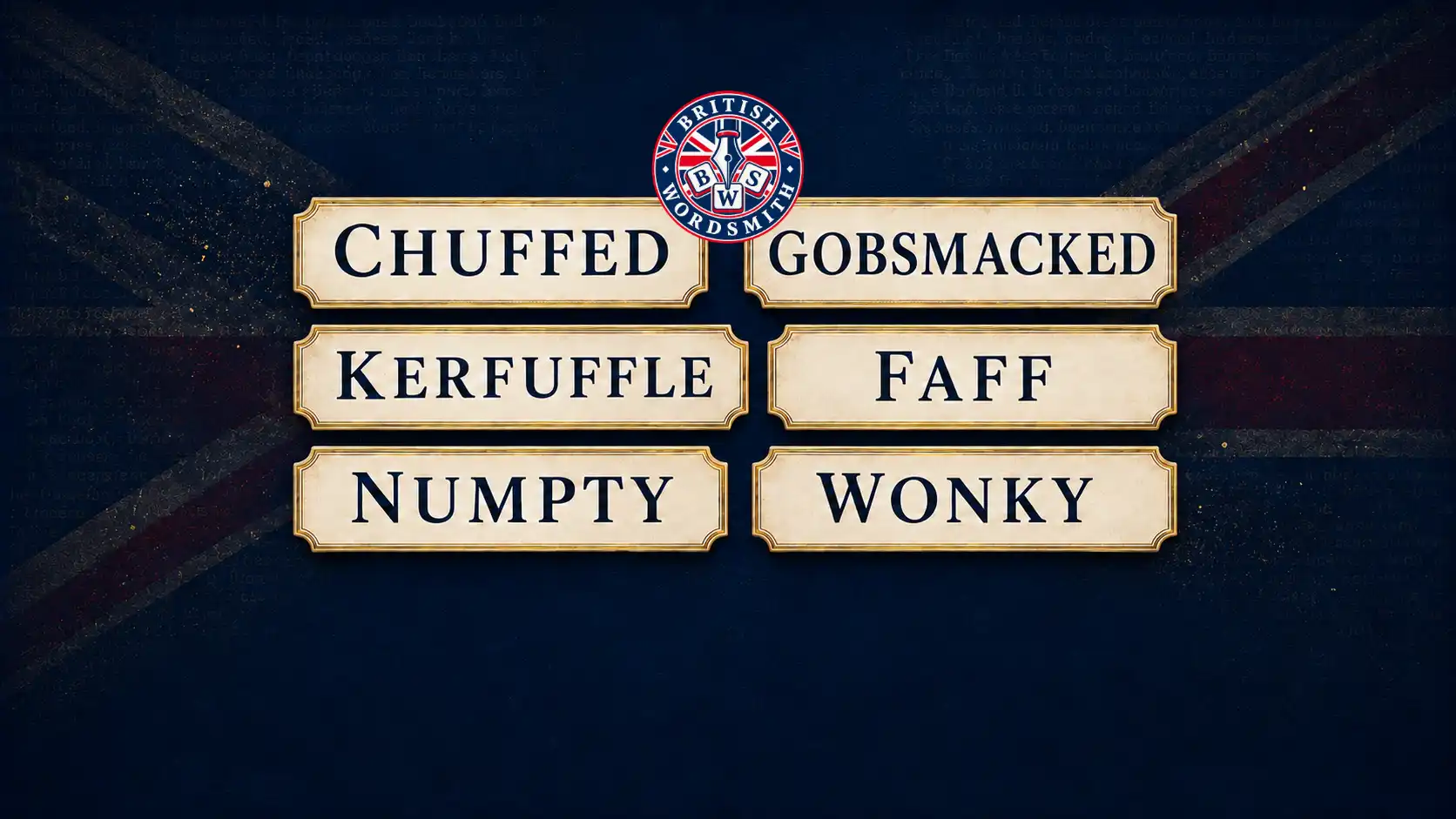
Someone can be chuffed, knackered or gobsmacked. A simple task can become a faff, a disagreement can turn into a kerfuffle and a questionable repair may be dismissed as a bodge.
Many of these words are informal, regional or difficult to translate precisely. Their meanings often depend upon tone and context, which is part of what makes them so expressive.
Here are 20 unusual British words, what they mean and how they are used.
British words at a glance
| Word | Meaning |
|---|---|
| bodge | a clumsy repair or badly executed job |
| brolly | an umbrella |
| cheeky | impudent, bold or playfully disrespectful |
| chinwag | an informal conversation |
| chuffed | very pleased |
| dodgy | unreliable, dishonest or potentially dangerous |
| faff | unnecessary effort or fuss |
| fortnight | a period of two weeks |
| gobsmacked | extremely surprised |
| gormless | lacking intelligence or awareness |
| kerfuffle | a commotion or minor dispute |
| knackered | extremely tired or worn out |
| miffed | mildly annoyed |
| naff | unfashionable, tasteless or poor |
| numpty | a foolish or inept person |
| scrummy | delicious |
| skint | having little or no money |
| twee | excessively quaint or sentimental |
| whinge | to complain persistently |
| wonky | crooked, unstable or not working properly |
1. Bodge
A bodge is a hurried, clumsy or poorly executed piece of work, particularly a repair.
The shelf is still standing, but that screw-and-tape arrangement is a bit of a bodge.
Bodge can also be used as a verb: someone might bodge together a temporary solution using whatever materials are available.
A bodge is not always useless. In British conversation, it can describe an improvised repair that works despite being technically questionable. A person performing it may be called a bodger.
2. Brolly
Brolly is an informal British word for an umbrella.
Take a brolly. It looks like rain.
The word is friendly and commonplace rather than strongly regional. Its exact formation is unusual: it developed as a playful alteration of umbrella rather than simply shortening the word to rella.
Considering British weather, it is perhaps unsurprising that we created a more companionable name for something we carry so often.
3. Cheeky
Cheeky describes behaviour that is impudent, irreverent or slightly disrespectful.
The child gave his teacher a cheeky grin.
Its tone can range from critical to affectionate. A cheeky remark may cross a boundary, but a cheeky smile is often charming.
British speakers also stretch the word into expressions such as a cheeky pint, meaning a spontaneous or mildly indulgent drink. The pint itself is not misbehaving; the speaker is acknowledging the small indulgence.
4. Chinwag
A chinwag is an informal and usually friendly conversation.
We haven’t seen each other for months, so we had a good chinwag.
The word creates a wonderfully literal image of chins moving during a lengthy chat. It normally suggests relaxed conversation rather than a formal meeting or serious negotiation.
Someone may invite a friend over for a cup of tea and a chinwag—two activities that fit together rather naturally.
5. Chuffed
To be chuffed is to be very pleased or proud.
She was chuffed with her crossword score.
It is commonly intensified as well chuffed or dead chuffed. Both mean extremely pleased, despite dead sounding rather less celebratory.
Context matters because older and less common uses of chuffed can carry different meanings. In everyday modern British English, however, I’m chuffed is normally very good news.
6. Dodgy
Dodgy is an extraordinarily flexible British adjective.
It can describe something unreliable:
The car has a dodgy gearbox.
It can suggest dishonesty:
That salesman seemed dodgy.
It may also mean risky, unsafe or of questionable quality:
I wouldn’t eat that dodgy-looking sandwich.
The exact meaning comes from context, but none of them inspires confidence. If a British person calls something dodgy, approach with caution.
7. Faff
A faff is an activity involving more effort, fuss or complication than it deserves.
Resetting the account was such a faff.
As a verb, to faff about means to spend time on disorganised or unnecessary activity:
Stop faffing about or we’ll miss the train.
Faff is particularly useful because it describes not merely inconvenience, but inconvenience mixed with fiddling, delay and mild exasperation.
8. Fortnight
A fortnight is a period of fourteen days or two weeks.
We’re going on holiday for a fortnight.
The word comes from the idea of fourteen nights. It remains completely ordinary in British English, although many American speakers would simply say two weeks.
A similar word, sennight, once meant seven nights or one week. That word has largely disappeared, leaving fortnight to carry on alone.
9. Gobsmacked
Someone who is gobsmacked is utterly astonished.
I was gobsmacked when they announced the winner.
Gob is an informal British word for the mouth. Gobsmacked therefore conveys the image of a person being struck speechless by surprise.
It is stronger and more colourful than surprised, but it does not have to describe something unpleasant. A person can be gobsmacked by wonderful news.
10. Gormless
Gormless describes someone who appears foolish, slow-witted or lacking in awareness.
He stood there looking completely gormless.
Curiously, modern English rarely uses gorm by itself. The older forms gome and gaum referred to attention, care or understanding. A gormless person is therefore someone apparently without those qualities.
It is an insult, although usually less vicious than calling someone stupid outright. Tone still matters.
Did you know?
Loading facts…
11. Kerfuffle
A kerfuffle is a commotion, disturbance or minor disagreement.
There was a kerfuffle over who had reserved the table.
The word usually makes the incident sound less serious. A diplomatic crisis is not normally a kerfuffle, but an argument in a village committee certainly might be.
Its pleasantly chaotic sound suits its meaning: plenty of noise and agitation, but probably no lasting disaster.
12. Knackered
Knackered most commonly means extremely tired.
I’ve been working all day and I’m absolutely knackered.
It can also describe something badly worn or broken:
The old washing machine is completely knackered.
This is very informal language. Some speakers regard it as mildly rude because of the word’s historical associations, so it is better suited to conversation than a formal business letter.
13. Miffed
To be miffed is to be irritated, offended or mildly annoyed.
He was rather miffed that nobody remembered his birthday.
The word is useful for an emotion somewhere between slight disappointment and genuine anger. Saying someone is miffed can deliberately understate their reaction, however, so a person described as a bit miffed may actually be furious.
That British habit of understatement strikes again.
14. Naff
Naff describes something unfashionable, tasteless, poor or embarrassingly uncool.
The decorations looked rather naff.
It became particularly prominent in British usage during the twentieth century. Several entertaining acronym-based explanations have circulated for its origin, but they are not supported by convincing historical evidence.
Sometimes slang is simply slang. A colourful story repeated often enough does not become an etymology.
15. Numpty
A numpty is a foolish, inept or ridiculous person.
You’ve put the batteries in backwards, you numpty.
The word is associated particularly with Scottish usage but is now understood widely across Britain. It can be insulting, although friends often use it affectionately when someone makes a harmless mistake.
Calling a stranger a numpty may start a row. Calling yourself one after losing your keys is generally safe.
16. Scrummy
Scrummy means delicious or extremely enjoyable.
That apple crumble was scrummy.
It is an informal shortening or alteration of scrumptious. The word can sound playful or slightly childish, but adults use it too—particularly when discussing cakes, puddings and other things that justify enthusiasm.
It should not be confused with scrum, despite Britain’s long relationship with rugby.
17. Skint
Someone who is skint has little or no money available.
I can’t come to the pub tonight. I’m completely skint.
Skint usually describes a temporary lack of spending money rather than permanent poverty. A person may be skint just before payday but financially comfortable after it.
It is informal and blunt, yet extremely common in British conversation.
18. Twee
Twee means excessively quaint, dainty, sentimental or affected.
The café was charming, although the floral teapots were slightly twee.
Something described as twee may be attractive but trying too hard to appear charming. The judgement is subjective: one person’s delightful country cottage is another person’s twee nightmare.
The word is thought to have developed from a childish pronunciation of sweet, which rather perfectly suits its modern meaning.
19. Whinge
To whinge is to complain repeatedly in an irritating manner.
He spent the entire journey whingeing about the traffic.
A whinge is usually less serious than a formal complaint. Someone lodging a justified grievance is complaining; someone grumbling endlessly about minor inconveniences may be whingeing.
The noun is equally useful:
Have a quick whinge if you must, then let’s solve the problem.
American readers may be more familiar with whine, although the two words are not identical in every context.
20. Wonky
Wonky describes something crooked, unstable, unreliable or not functioning correctly.
That table has a wonky leg.
It can also describe systems, reasoning or technology:
The figures look wonky.
My internet connection has gone wonky again.
Wonky is informal but wonderfully efficient. It tells us that something is not quite right without requiring a detailed diagnosis.
Are these words used everywhere in Britain?
Not necessarily.
British English contains enormous regional variation. A word familiar in Glasgow may sound unusual in Cornwall, while expressions common in Yorkshire may be rare in London.
Age, background and context matter too. Some words move from regional dialect into national use through television, music and social media. Others gradually fall out of fashion or acquire new shades of meaning.
British does not mean universal. It means the word is strongly associated with British usage, even if some British speakers rarely use it and people elsewhere understand it perfectly well.
Can these words appear in crosswords and word games?
Many can, although individual games use different approved dictionaries.
Short informal words such as naff, twee and faff are particularly attractive to crossword setters. Longer words such as gobsmacked and kerfuffle make memorable anagrams, while unusual letter combinations can help experienced players recognise possible answers.
Try entering unfamiliar letters into the Crossword Solver or rearranging them with the Word Descrambler. You can also explore British words by length using the Word List Explorer.
Whether a particular word is accepted in competitive play depends upon the official word list being used.
British English never stands still
Words move between regions, generations and countries. Informal expressions become mainstream, old terms acquire new meanings and supposedly modern slang sometimes turns out to have surprisingly deep roots.
That constant change is part of the character of British English. It can be precise, understated, blunt and gloriously silly—occasionally all within the same sentence.
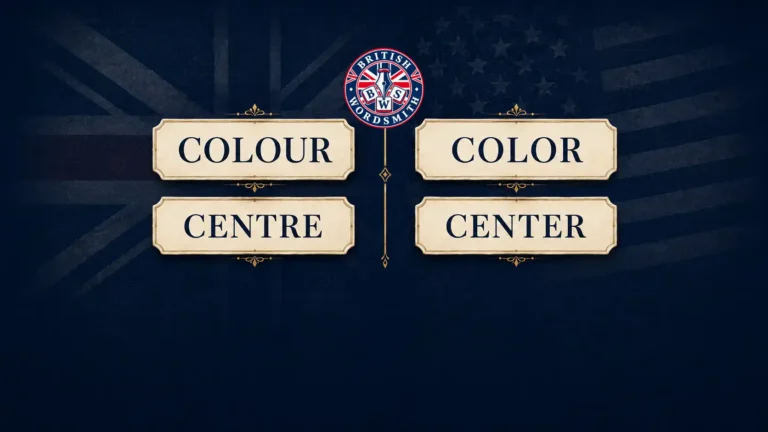
For another look at the differences within the language, read our guide to British and American spelling.